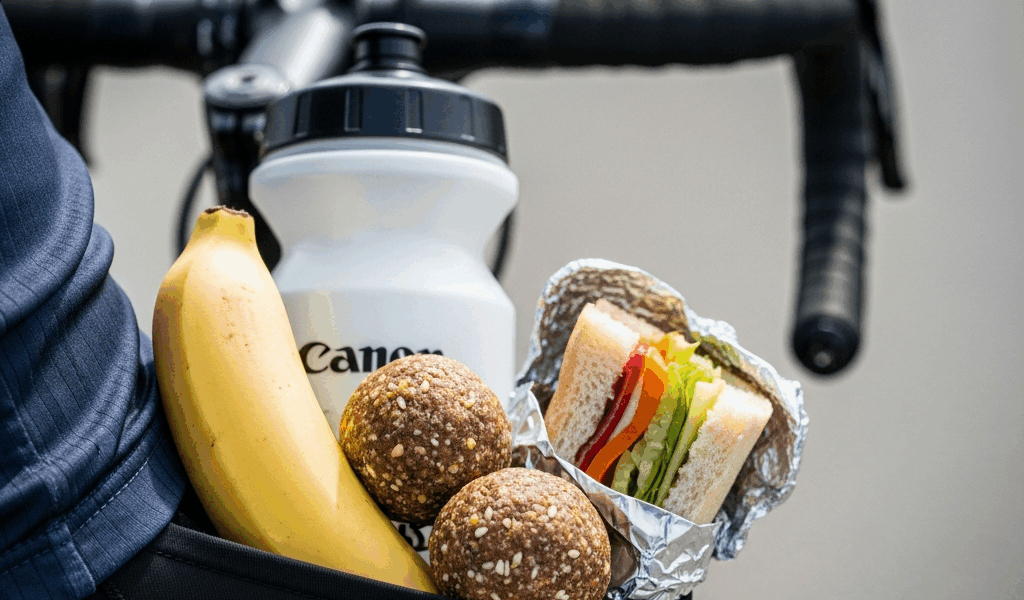
Best Cycling Snacks for Long Rides — What Actual Cyclists Eat
Cycling nutrition has gotten complicated with all the sponsored content and gel-company marketing flying around. I’ve ridden somewhere north of 15,000 miles over the past six years — most of it fueled by bananas, peanut butter sandwiches, dates, rice cakes, and whatever homemade energy bars I had time to throw together on a Sunday afternoon. As someone who’s done this long enough to make every mistake possible, I learned everything there is to know about fueling long rides the hard way. Today, I will share it all with you.
This article includes affiliate links. We may earn a commission at no extra cost to you.
The short version: you probably don’t need what your local bike shop is selling.
Why Real Food Works as Well as Gels — And Honestly, Tastes Better
Probably should have opened with this section, honestly. Too many cyclists choke down their third gel of the day convinced there’s no other option — sticky fingers, chemical aftertaste, the whole miserable experience.
But what is the actual difference between real food and a gel? In essence, it’s digestion speed and format. But it’s much more than that.
The carbohydrate math doesn’t care what wrapper your food came in. You need 30 to 90 grams of carbs per hour depending on intensity. A medium banana lands at around 27 grams. Two rice cakes with honey hit roughly 40. A single gel packet? Somewhere between 20 and 30 grams. Identical territory. That’s what makes real food so endearing to us long-ride cyclists — it does the same job without the $3 price tag per packet.
A box of six gel packets runs $12 to $18 depending on brand. I’m apparently a Clif Bar household and the ShotBloks work for me while traditional liquid gels never sit right. So I started experimenting. A bunch of bananas costs maybe $0.60 per banana. Dates from the bulk bin at my local co-op — $8 per pound, roughly 40 pieces, about $0.20 per date. Three or four long rides per month on real food instead of gels saves you $40 to $60. Don’t make my mistake of waiting two years to figure that out.
Then there’s hour three. You’ve had three gels. Strawberry-flavored gel number four now tastes like someone dissolved a Jolly Rancher in corn syrup. A fig bar still tastes like a fig bar. A peanut butter sandwich tastes like lunch — actual lunch. Your palate doesn’t revolt. You want to eat, which means you actually do eat, which means you don’t bonk.
Real food also arrives bundled with fiber, fat, protein, and micronutrients gels simply don’t carry. Energy distribution stays more even. You feel fuller longer. The ride doesn’t fall apart at mile 50.
Gels still have their place — racing, hard threshold efforts, emergencies. More on that later. So, without further ado, let’s dive in.
The Best Real Food Cycling Snacks — What I Actually Carry
I’ve tested dozens of combinations across years of riding. These six options live in my jersey pockets or top tube bag on virtually every ride longer than ninety minutes.
Peanut Butter and Jelly Sandwich
Cut into quarters, wrapped tightly in foil. Two slices of whole wheat bread — I use Dave’s Killer Bread 21 Whole Grains — with two tablespoons of peanut butter and one tablespoon of Smucker’s strawberry jam. That’s approximately 45 grams of carbs, 8 grams of protein, and a snack that survives three hours in a jersey pocket without disintegrating. The fat in the peanut butter slows absorption slightly. Steadier energy. I eat one quarter every 30 to 45 minutes on long days.
Banana
Medium banana. 27 grams of carbs. Zero prep. Natural wrapper. That’s it. Some cyclists fuss about mush — wrap the stem in a bit of electrical tape and the thing stays intact through a five-hour ride without issue. Potassium content matters in heat. One banana on a three-hour effort handles that concern completely.
Medjool Dates
One date runs about 16 grams of carbs and costs nearly nothing bought in bulk. They taste like caramel. Soft enough to chew at speed without nearly crashing. I’ll eat three dates spread across a four-hour ride — calorie-dense enough that a small handful of five covers most of what you need. Frustrated by expensive sports chews that tasted like medicine, a friend of mine started riding exclusively on Medjool dates during long gravel events using nothing fancier than a small ziplock bag in his back pocket. He hasn’t looked back.
Rice Cakes with Honey
Homemade. Roughly 20 grams of carbs per rice cake with a drizzle of honey or a smear of jam inside. Lightweight, easy to portion, quick to chew. I make a batch every Sunday — takes maybe 25 minutes total — and wrap each one individually in parchment paper. The starch digests quickly enough that they work even at moderate-to-hard intensities. This new approach to ride food took off for me several years ago and eventually evolved into the rice cake ritual enthusiasts know and swear by today.
Fig Bars
Nabisco Fig Newtons. About $3 per box of nine bars. Each bar delivers 12 grams of carbs with actual fruit content — not a lab-synthesized approximation of fruit flavor. Two bars per hour keeps you fueled without flavor fatigue. A single box carries you through two or three long rides. Not glamorous. Extremely effective.
Homemade Energy Balls
Rolled oats, almond butter, honey, dried cranberries. Roll them walnut-sized. One ball sits at roughly 8 to 10 grams of carbs plus protein and fat from the nut butter. They hold firm in warm jersey pockets — nothing melts, nothing smears across your kit. Make a batch monthly. Store in a Tupperware in the fridge. Total cost per ball comes out to maybe $0.15.
When Gels and Bars Actually Make More Sense — The Real Talk
Real food isn’t the answer to every situation. Specific conditions exist where gels earn their spot in your kit, and pretending otherwise would be bad advice.
Racing and High-Intensity Efforts
Heart rate at threshold or above means your stomach’s blood supply drops. Digestion slows significantly. You need carbohydrates requiring minimal digestive effort — gels and sports drinks handle this. During competitive rides or sustained hard training blocks, a gel makes genuine sense. Real food becomes uncomfortable around hour two of hard efforts. That’s not a willpower problem. That’s physiology.
Climbing and Technical Terrain
You can’t safely chew through a steep technical descent. A gel goes down without requiring your hands or attention. On rides featuring sustained climbing, one or two gels mixed into an otherwise real-food strategy keeps you fueled without pulling focus from the bike. That combination — mostly real food with a gel or two as tactical tools — might be the best option, as long climbing requires rapid-access fueling. That is because jaw-and-hand coordination at 40 mph downhill is not an ideal situation.
Emergency Bonk Control
A gel absorbs in about 15 minutes. Real food takes longer. If you’ve miscalculated your fueling and feel the familiar hollowness of incoming bonk, a gel is genuine damage control. Keep one in your seat bag. Always.
Stomach Sensitivity
Some digestive systems handle gels better than solid food at intensity. If that’s you, experiment before committing to real food full-time. Your gut adapts to training stimulus, but forcing it in the wrong direction just wastes energy and makes the last hour miserable.
How to Carry Snacks on Your Bike — The Practical Details
While you won’t need a full feed station setup, you will need a handful of simple carrying solutions. Real food needs protection from moisture and pressure — it’s slightly more involved than dropping four gel packets in a pocket.
Jersey Pockets
First, you should wrap everything individually — at least if you want anything resembling its original shape by mile 40. Aluminum foil over parchment for anything prone to moisture. Three rear jersey pockets hold a surprising amount. Don’t overstuff them. Leave breathing room so a banana doesn’t arrive at your mouth as a paste. A four-hour ride needs two pockets maximum for snacks, leaving the third for your phone, keys, and emergency gel.
Top Tube Bag
A small top tube bag — Revelate Designs makes several models running $40 to $80 — holds larger items cleanly. Sandwiches live here rather than getting compressed against your spine. Accessible without reaching behind you at speed. Mount it slightly off-center so it clears your stem.
Bento Box
For mixed-snack rides, a small bento box keeps everything organized and visible. The Gorilla Crate line from Revelate holds roughly a pound of mixed snacks on the seat tube. You can see what remains. Nothing shifts around. Nothing escapes into your drivetrain.
Pre-Wrapping Everything
This is the detail that makes the whole system actually work. Wrap the sandwich in foil the night before. Parchment around the rice cakes. Dates already in a ziplock. Thirty miles in, unwrapping something pre-wrapped takes three seconds. Fumbling with packaging on a fast group ride takes thirty — and costs you contact with the wheel ahead. Pre-wrap everything. Every time.
The best cycling snacks for long rides aren’t what the marketing departments want you buying. They’re already in your kitchen. Your wallet will notice. Your taste buds — somewhere around hour three, staring down yet another chemical-strawberry gel — will thank you considerably.

Stay in the loop
Get the latest cycling gear galaxy updates delivered to your inbox.