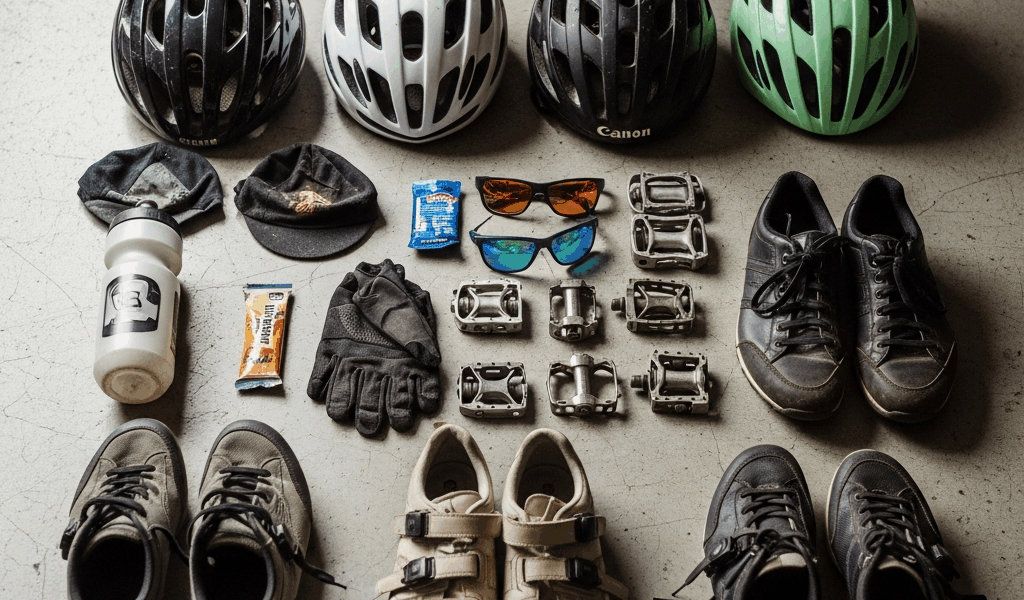
Cycling gear moves fast. What was top-of-the-line two years ago is now mid-range, and manufacturers keep finding ways to shave grams, add features, and — unfortunately — raise prices. Here’s a practical look at what’s worth paying attention to in the 2026 cycling gear landscape, and what’s mostly marketing noise.
This article includes affiliate links. We may earn a commission at no extra cost to you.
Helmets: MIPS Is Table Stakes
Nearly every quality helmet now includes some form of rotational impact protection, whether that’s MIPS, WaveCel, SPIN, or a proprietary system. The good news is this technology has trickled down to the $80-120 price range, so you no longer need to spend $250+ to get meaningful crash protection.
The bigger trend this year is improved ventilation in aero helmets. Brands like POC, Specialized, and Lazer have released aero-road hybrids that offer the drag reduction of a time trial helmet with cooling closer to a traditional road helmet. If you’re doing long rides in warm weather but still care about speed, these hybrid designs are worth a look. The Specialized Propero 4 and the Lazer Vento KinetiCore stand out for balancing aero performance, ventilation, and price.
Electronic Shifting: The New Normal
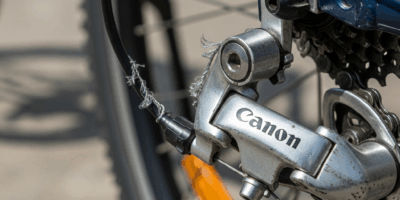
Mechanical shifting isn’t dead, but it’s increasingly hard to find on bikes above $3,000. SRAM and Shimano have both committed to wireless electronic shifting for their upper tiers, and the reliability has gotten genuinely good. SRAM’s AXS platform uses coin-cell batteries in each derailleur, while Shimano’s Di2 runs on a single internal battery with wired connections between components.
The practical difference for most riders is minimal — both shift crisply and reliably. SRAM’s system is easier to set up since there are no wires to route, but Shimano’s single battery means you only have one thing to charge. Pick based on your groupset preference (Shimano tends to have smoother shifting feel, SRAM offers wider gear ranges) rather than the electronic platform itself.
If you’re on a budget, Shimano’s 105 Di2 remains the sweet spot. It uses the same shifting technology as Dura-Ace at a fraction of the price, and the weight penalty is modest.
Tires: Width Keeps Growing
The trend toward wider road tires continues in 2026. Thirty-millimeter tires are now standard on most road bikes, and many frames accommodate 35mm or wider. This isn’t just about comfort — wider tires at lower pressures actually roll faster on real-world road surfaces because they absorb bumps rather than bouncing over them.
Tubeless setups have become more reliable too. The sealant formulations from companies like Orange Seal and Stan’s have improved, with longer shelf life and better sealing of larger punctures. If you’re still running tubes on your road bike, switching to tubeless is probably the single biggest upgrade you can make for ride quality and flat protection.
Continental GP5000 S TR, Pirelli P Zero Race TLR, and Vittoria Corsa Pro TLR are all excellent choices in the 30-32mm range.
Power Meters: Cheaper Than Ever
Left-side crank-based power meters now start under $300 (4iiii Precision, Stages), and pedal-based options like Favero Assioma are available for around $350-400 for dual-sided measurement. A power meter is still the most useful training tool you can add to your bike, and the price barrier is basically gone.
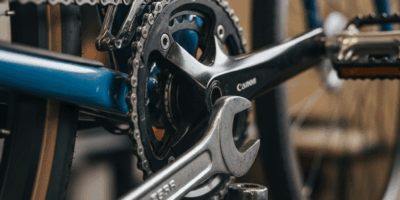
If you’re choosing between a crank-based and pedal-based unit, pedals are easier to swap between bikes. Crank arms require matching your crankset brand and model. For most riders, the Favero Assioma Duo-Shi (Shimano pedal compatible) offers the best combination of accuracy, convenience, and value.
What’s Overhyped
A few things you can safely ignore this year:
- Integrated cockpits on sub-$5,000 bikes. They look clean but make fitting and maintenance harder. A standard stem and handlebar setup is lighter, more adjustable, and easier to work on.
- Bike computers with color touchscreens. Your Garmin Edge 530 or Wahoo Bolt v2 still does everything you need. The newer color screens look nice but drain batteries faster and add cost without meaningful functionality.
- Gravel-specific everything. A road bike with clearance for 35mm tires handles 90% of gravel riding perfectly well. You don’t need a separate gravel bike, gravel shoes, and gravel kit unless you’re doing truly rugged off-road routes.
Where To Spend, Where To Save
Spend on contact points: good saddle, quality shoes, and proper bike fit. These affect comfort and performance more than any component upgrade. Save on flashy cockpit integration and bleeding-edge frame materials. A well-fitted aluminum bike with a quality wheelset will outperform a poorly fitted carbon superbike every day of the week.

Stay in the loop
Get the latest cycling gear galaxy updates delivered to your inbox.