What Kind of Bike Should I Get?
Bike shopping has gotten overwhelming with all the categories, subcategories, and competing claims flying around. As someone who bought the wrong bike twice before figuring out what I actually needed, I’ve learned everything there is to know about matching a bike to the way you actually ride. Today, I will share it all with you.
That’s what makes bike selection endearing to us cycling types — there’s a genuinely right answer for your specific situation, and finding it makes every ride better than it would have been on the wrong bike.
Understanding Different Types of Bikes
Bicycles break down into several main categories. Each is optimized for different purposes and terrains, and the differences matter more than the marketing suggests.
Road Bikes
Road bikes are designed for speed and efficiency on paved roads. Lightweight frames, thin tires, and drop handlebars put you in an aerodynamic position. They’re fast on smooth surfaces and perfectly suited for commuting, racing, and long-distance road riding. They’re not suited for rough terrain — that’s the trade-off for everything they’re good at.
Mountain Bikes
Mountain bikes are built for trails and rough terrain that would damage a road bike. Strong frames, wide knobby tires for grip, flat handlebars for control, and suspension systems to absorb shocks. The range within mountain bikes is significant — a cross-country race bike and a downhill sled are both “mountain bikes” but feel completely different.
Hybrid Bikes
Hybrid bikes combine road and mountain bike features into something versatile for multiple uses. More upright riding position, medium-width tires, flat handlebars. Probably should have listed this first for the majority of people who aren’t sure what they want, honestly — if your riding will be a mix of paved paths, light gravel, and urban streets, a hybrid solves your actual problem without over-specializing.
City/Commuter Bikes
City bikes are optimized for urban commuting comfort over short to medium distances. They typically include practical features — racks, fenders, lights — built in rather than added on. Less versatile than hybrids but more practical for daily commuting in their specific context.
Gravel Bikes
Gravel bikes handle both pavement and unpaved paths in the same ride. Wider tires than road bikes, more relaxed geometry for comfort on longer efforts, and clearance for mud and rough surfaces. The category has grown significantly as more riders wanted to explore routes that pure road bikes couldn’t handle.
Touring Bikes
Touring bikes are built for long-distance travel with loaded luggage. Sturdy frames, comfort-focused geometry, and mounts for racks and panniers throughout. If you’re planning multi-day trips or bikepacking adventures, this is the category designed specifically for that purpose.
Electric Bikes
E-bikes add a motor that assists pedaling, making hills and headwinds significantly less punishing. Available in road, mountain, and commuter configurations. They’ve become a genuine commuting solution for people who arrive somewhere needing to not be sweaty, or who need to cover more distance than their fitness level currently supports.
Folding Bikes
Folding bikes prioritize portability — they collapse for transit and small-space storage. Perfect for multi-modal commuting where the bike needs to fit on a train or in an apartment. The ride quality is a step down from a comparable full-size bike, but the convenience is real for the right user.
Factors to Consider When Choosing a Bike
Purpose
Start here. Commuting, trail riding, road cycling, and touring each have a clearly better bike type. Knowing how you’ll use the bike 80% of the time narrows the field dramatically.
Terrain
Where you’ll actually ride matters as much as how. Smooth roads favor different choices than gravel paths or mountain trails. Be honest about where you’ll ride rather than where you hope to ride someday.
Budget
Bikes span an enormous price range. Determine what you can spend before shopping, and account for gear and accessories on top of the bike cost. A decent helmet, lock, and lights can add $100–200 to the real cost of getting started.
Fit and Comfort
A bike that fits well makes every ride better and reduces injury risk. Test ride different models rather than ordering online without sitting on the bike first. Adjustable components — saddle height, handlebar position — let you fine-tune once you’re riding.
Suspension and Frame Material
Suspension matters primarily for off-road riding; it adds weight and complexity without benefit on smooth pavement. Aluminum is the default frame material at most price points — light, durable, and affordable. Carbon is lighter and often more comfortable but costs significantly more. Steel is heavier but offers a smoother ride quality and is nearly indestructible.
Maintenance and Accessories
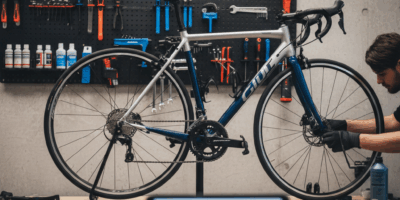
Basic maintenance extends the life of any bike. Regular tire pressure checks, brake inspections, and chain lubrication are the three habits that matter most. Learning to fix a flat tire takes twenty minutes to learn and will save you countless frustrations.
Essential Accessories
- Helmet — non-negotiable for safety
- Lights and reflectors — critical for visibility in low-light conditions
- Lock — quality inversely proportional to theft regret
- Pump and spare tube — the most important emergency kit
- Water bottle and holder — hydration matters on anything longer than short errands