
Types of Cycles
Cycling has gotten complicated with all the bike categories and subcategories flying around. As someone who has owned and ridden most of the major types over the years, I’ve learned everything there is to know about what separates one style of cycle from another. Today, I will share it all with you.
That’s what makes the cycling world endearing to us riders — there’s a genuinely different machine for every kind of riding you’d want to do.
Road Bikes
Road bikes are designed for speed and distance on paved surfaces. Lightweight frames, narrow tires, and drop handlebars define the category. The thin tires reduce rolling resistance, the geometry puts you in an aerodynamic position, and the whole package is optimized for covering ground quickly on smooth roads. These are the bikes you see in races and on long weekend group rides.
Mountain Bikes
Mountain bikes handle rough terrain that would destroy a road bike. Wide, knobby tires grip dirt and rock, durable frames absorb abuse, and suspension systems — either front-only or full front-and-rear — soak up the impacts. I’ve run a hardtail on local trails for years and the combination of confidence and capability on technical terrain is something road riding never provides.
Hybrid Bikes
Hybrid bikes combine features from road and mountain bikes. Comfortable upright riding position, medium-width tires, flat handlebars — they’re genuinely good at both urban commuting and light off-road riding without excelling at either. Probably should have led with this for new riders, honestly. If you don’t know exactly what type of riding you’ll do, a hybrid is the safest starting point.
Electric Bikes
Electric bikes come with an integrated motor to assist with pedaling. Frustrated by hills or headwinds? E-bikes solve that problem directly. They look like regular bikes but carry a battery and motor system. Commuters and older riders have embraced them enthusiastically, and the range on modern systems is good enough for most everyday use cases.
Folding Bikes
Folding bikes are designed for portability above everything else. They fold without tools to a compact size that fits on buses, subway cars, and in apartment closets. City dwellers with limited space and multi-modal commutes get a lot of value out of these. The ride quality is a step down from a comparable full-size bike, but the convenience makes the trade-off worthwhile for the right user.
Cruiser Bikes
Cruiser bikes prioritize comfort and style over speed. Wide tires, cushioned seats, upright handlebars, and a laid-back riding position make them perfect for beachside paths and relaxed rides with no particular destination. Their retro aesthetic and casual nature make them popular in coastal areas and anywhere the pace of life is unhurried.
Touring Bikes
Touring bikes are built for long-distance travel with loaded luggage. Sturdy frames, rack mounts, wider gear ranges, and mounts for panniers — everything is designed to carry weight comfortably across hundreds of miles. If you’re planning a multi-day self-supported ride, this is the category built specifically for that purpose.
Recumbent Bikes
Recumbent bikes let riders sit in a reclined position rather than upright. This design reduces strain on the neck and back considerably. The aerodynamic position can also produce impressive speeds on flat terrain. They’re available in two-wheel and three-wheel versions, each with different stability characteristics.
Track Bikes
Track bikes are built for velodrome racing. Fixed gears, no brakes, smooth lightweight construction — everything is stripped to essentials for controlled, high-speed riding on a closed banked track. Riding one requires learning to manage speed through leg resistance rather than a brake lever, which takes real adjustment if you’re coming from any other style of bike.
BMX Bikes
BMX bikes are made for stunts, tricks, and racing on dirt tracks. Small frames, 20-inch wheels, and a robust build that handles high-impact activities characterize the category. They’re popular among younger riders and anyone drawn to the skill-focused side of cycling. Different BMX disciplines — freestyle, dirt, racing — have slightly different frame geometries optimized for their specific demands.
Fixie Bikes
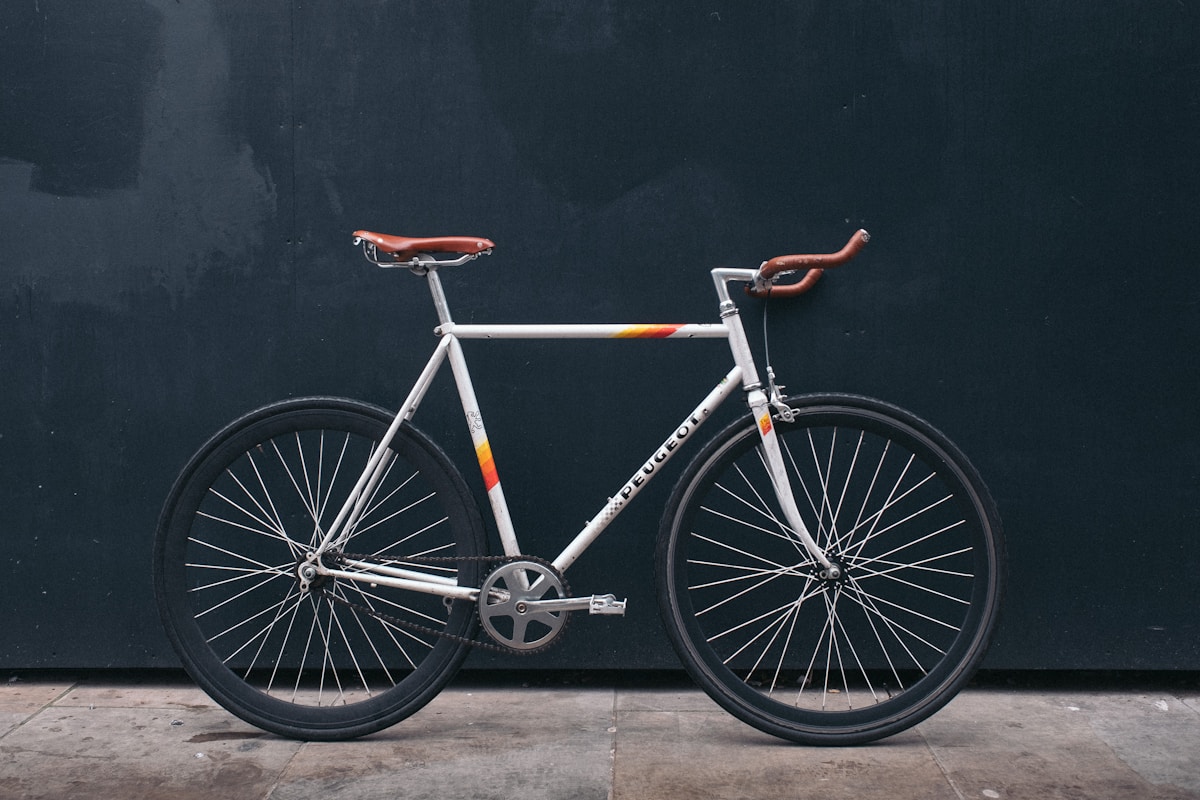
Fixed-gear bikes run a single gear with no freewheel mechanism. The pedals are always moving when the bike is moving. Simple, low-maintenance, and offering a direct connection between rider and machine that dedicated fans describe as uniquely satisfying. Urban riders in dense cities have embraced them for their clean aesthetics and easy upkeep.
Cargo Bikes
Cargo bikes are designed to carry heavy loads that would be impractical on a standard bicycle. Longtail designs extend the rear rack area; box bike designs put a cargo compartment out front. They’re popular for urban deliveries and family transportation — a genuine car replacement for short-distance hauling in cities with good cycling infrastructure.
Tandem Bikes
Tandem bikes carry two riders on an extended frame with seats and pedal sets for both. Coordination matters — both riders need to pedal in sync. Used for recreational riding, racing, and touring, they’re also popular in the visually impaired cycling community where a sighted pilot rides the front position.
Cycle-Rickshaws
Cycle-rickshaws, or pedicabs, are tricycles designed to carry passengers in a rear compartment. Common across much of Asia as a form of public transport, they offer an efficient, low-emission way to move people through congested urban streets.
Unicycles
Unicycles have a single wheel and require balance to ride. Used for sport, entertainment, and pure challenge, they come in various types — freestyle, mountain, and long-distance models, each designed for different activities. Learning to ride one takes considerably longer than a standard bicycle but the skill is genuinely impressive once developed.
Handcycles
Handcycles are three-wheeled cycles powered by hand pedals rather than feet. They provide an inclusive cycling option for individuals with lower-body disabilities. Available in recreational, competitive, and off-road models, handcycles have developed into a serious competitive sport at the Paralympic level.
Velomobiles
Velomobiles are fully enclosed cycles, typically three-wheeled, that provide weather protection and aerodynamic efficiency. Used for long-distance travel and commuting, their enclosed design allows higher speeds with less effort than an open bicycle.
Tricycles
Tricycles provide stability that standard bicycles don’t offer. Used by children learning to ride, adults who want a more stable platform, and seniors managing balance challenges, they come in upright and recumbent configurations. Three wheels solve the balance problem entirely, which matters more for some riders than speed or efficiency.
Penny-Farthings
Penny-farthings — the large front wheel, tiny rear wheel Victorian-era bicycle — are mostly used for historical reenactments and nostalgic events today. They’re less a practical transportation option than a piece of cycling history that some enthusiasts still maintain.
Fat Bikes
Fat bikes have oversized tires designed for soft surfaces — sand, snow, mud — where standard mountain bike tires would sink or slide. The wide footprint provides traction and flotation that makes riding in extreme conditions actually possible.
Gravel Bikes
Gravel bikes bridge road and mountain biking for mixed-terrain riding. Wider tires than a road bike, a more relaxed geometry, and the ability to handle rough paths, gravel roads, and smooth pavement in the same ride. The category has grown significantly as more riders discovered they wanted to explore routes that pure road bikes couldn’t handle.